The Frozen Conflict in Transnistria

Welcome to my last blog post. Now, we will discuss an issue of the so-called frozen conflicts. Generally, they are the remains of the wars and conflicts which were not solved. We will consider on the frozen conflicts in the post-Soviet area. More specifically we will focus on the area of Transnistria. This region is quite forgotten and just a few people understand the origin of the conflict. And that’s exactly what the last post will be about- an explanation of the frozen conflict in Transnistria and a detection of a role of Russia in it. So, the main questions for the last post are: “What happened in Transnistria and how Russia influenced these events?” At first, I will describe the background of the conflict in Transnistria and then the conflict itself. During the post, there will be highlighted a role of Russia.
3

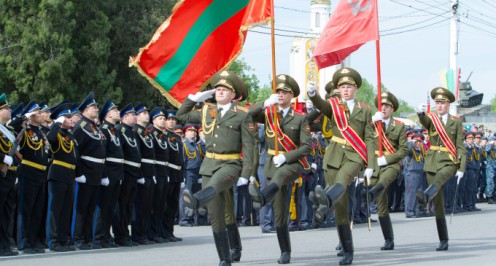
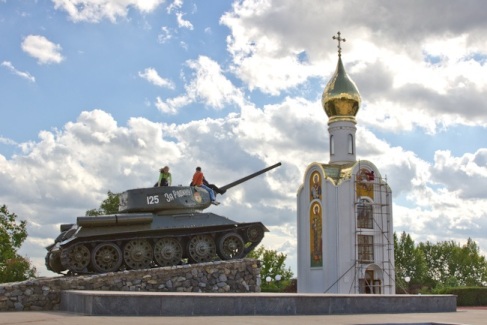
Picture 01: Transnistrian army

FROZEN CONFLICT

First of all, let me introduce you a concept “frozen conflict”. The history of frozen conflicts in the post-Soviet area started with a fall of the Soviet Union. Some successor states had a problem with the regions which didn’t want to accept the new governments. These separatist regions were Chechnya, Abkhazia, South Ossetia, Nagorno-Karabakh, and Transnistria. The separatists prevailed on the battlefield (with exception of Chechnya) but didn’t get an international recognition. It has led to a confiscation of the conflicts. They are marked as frozen conflicts. But the frozen phase of the conflicts doesn’t have to last forever. For example, in the year 2008, Russia “defrost” the conflict in South Ossetia and Abkhazia and the war followed.

TRANSNISTRIA

Geographical facts

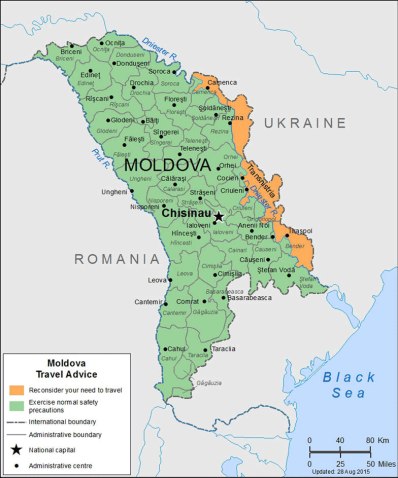
Transnistria (officially the Pridnestrovian Moldavian Republic) is a landlocked self-proclaimed state. The only entities that formally recognize Transnistria as an independent state are South Ossetia and Abkhazia, whose independence is recognized only by Russia. Transnistria is an area between the river Dniester and the borders with Ukraine. The capital is Tiraspol. In Transnistria, there live around 475 000 people. The most of them are Moldovans (32%), Russians (30%), Ukrainians (29%). People speak Russian, Moldavan, and Ukrainian. Transnistria hasn’t got any historical borders and has almost no natural resources.
1

Picture 02: Map of Moldova and Transnistria

Transnistria is famous because of a criminality, organized crime, and a black market with weapons. Because Moldova refuses the separation of this region and doesn’t want to secure the borders the selling of weapons is possible and widespread. In Transnistria, there is a control of mass media.
2

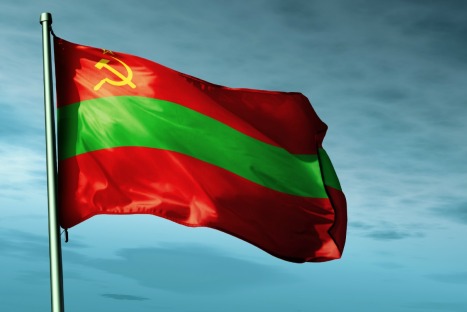
Picture 03: Flag of Transnistria

Historical background

If we want to understand this conflict, we have to begin in the far history. The origin of the conflict between Transnistria and Moldova can be found in the historical evolution of both areas because it was considerably separated. Moldova was under the control of the Ottoman dynasty during the 16th century. The borders were created by the river Dniester. On the other hand, Transnistria was a part of the Grand Duchy of Lithuania since the 15th century and it was under the influence of Russia since the end of the 18th century. In the year 1812, Russia conquered the area of Moldova and connected Transnistria and Moldova. For some time, Moldova was under the control of Romania. But in the year 1940, the Moldavian Soviet Socialist Republic was created and the both areas (Moldova and Transnistria) were united again. Moldova was one of the USSR’s fifteen union republics.

So, in the area of Moldova lived Moldovans who were affiliated with Romanians. On the other hand, in the area of Transnistria, there were predominantly Russians and Ukrainians.

During the control of the Soviet Union, there was the main industry in Transnistria and a lot of Russians came to work there. This helped to russification of Transnistria. After the fall of the Iron Curtain, the independent Republic of Moldova was established in the year 1991. A lot of Moldavian politicians wanted to join Moldova to Romania again. But the people on the east part of the country were against. After these events, the separatist Transnistrian Moldovan Soviet Socialist Republic was proclaimed. In August 1991, the declaration of the Independent Pridnestrovian Moldavian Republic was created and Igor Smirnov was elected as the first president. The Moldavan parliament responded by declaring both claims illegal.

Transnistrian War

The so-called Transnistrian War, which led to an estimated 700 deaths and 100 000 displaced persons, broke out in the months following the dissolution of the Soviet Union at the end of 1991. The biggest clashed were during spring 1992 when Moldavians troops wanted to recover their control under the city Bendery. In March 1992, escalating violence in and around Transnistria led the Moldavan parliament to declare a state of emergency. In the war, there fought separatist fighters from Transnistria, pro-Soviet volunteers and the Russian troops, specifically 14th Guards Army. This was the main problem. The war went so far that Snegur demanded that Russia must withdraw the 14th Guards Army from Moldovan territory and stop providing the separatists with arms or Chişinău might declare war on Russia. Yeltsin, the first President of the Russian Federation, wanted to end the conflict but he didn’t want Russian in Transnistria to be discriminated. On 21st June 1992, Russian and Moldavan presidents signed the armistice in Moscow. A tripartite Joint Control Commission was established by the representatives from Russia, Moldova, and Transnistria. Moreover, a peace-keeping force was established. Even in this case, the force was created by the representatives from all three areas. The demilitarized zone was established too. After these events, the conflict had frozen.

Situation after the war

What did the situation mean for Moldova? The loss of this area meant an economic weakness for Moldova. There were around 1/3 of the industrial sector and the bulk of energy production. On the other hand, in Transnistria, there were formed some quasi-state structures such as the government, the president, justice and the administration. But the most important seats have Russians or Ukrainians.

Russian support

The very existence of Transnistria is dependent on Russia. Russia provides economic and material support to Transnistria. The country is dependent on Russian gas supply by the firm Gazprom. Russia supports Transnistria in the areas such as education, legislation, and healthcare. We can claim that Transnistria is a product of Russian power policy in the region. The area is an important spur of Russian influence in West. Through Transnistria, Russia can influence even the decision by Moldova.

Russian troops in Transnistria

Russia helps Transnistria to from the military point of view. Russia helped with the training of the Transnistrian soldiers. Transnistria puts emphasis on the army. Despite the huge difference in population of Moldova (3 547 000) and Transnistria (475 000), both countries have roughly an equally large armed forces.

But the presence of the Russian troops in Transnistria is the main problem. Moldova takes the presence of Russian soldiers as a violation of its sovereignty. Transnistrian’s representatives claim that Russian soldiers ensure stability in the region. Although the Russian government agreed to the withdrawal of troops in October 1993, it never happened because the agreement wasn’t ratified. During the year 2015, 14th Guards Army which was present in Transnistria was reorganized into the Operational Group of Russian Forces and it stayed there, but the number of soldiers was reduced. Under the pressure of the OSCE, Russia has started to withdraw their military capacity from Transnistria, but it stopped in 2003. The presence of Russia troops in Transnistria is essential for Russia because it is stabilization factor in the area.

Russian influence

In the case of Transnistria, Russia used diplomacy too. Its effort resulted into the signature of the Bases for Normalisation of Relations between the Republic of Moldova and Transnistria which should create the common state of Transnistria and the rest of Moldova. The country would be divided into two areas but with some common features. In the year 2003, the Moldovan pro-Russian president Vorodin presented a proposal about a new declaration and Transnistria was invited to a cooperation, but Russia intervened secretly into the negotiations (the OSCE and Ukraine didn’t know about it). At the end, the negotiation failed. After that, Moldova inclined to the West and the main goals of the Moldovan foreign policy became the integration into the European Union and other western organizations.

In response to these events, there was a referendum in Transnistria in 2006. The 97% of citizens of Transnistria decided that they want their country to be independent but with a closer cooperation with Russia. But there is a question if Russia wants it too. For Russia, it is convenient that Transnistria is a part of Moldova because, with it, Russia can bind its interests and influence events in Moldova. In the year 2009, Russian Minister of Foreign Affairs visited Moldova. This visit should demonstrate the importance of Russia in the region. After it, the Moldovan president Voronin resigned under the Russian pressure and cancelled the statement about the withdraw of Russian troops.
4

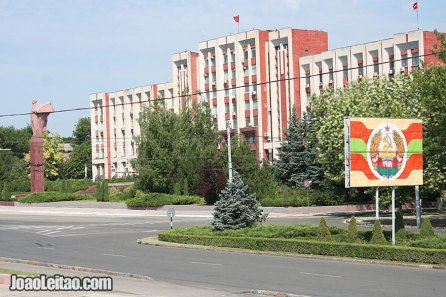
Picture 04: Tiraspol

Since 2009, Moldova faced a political instability. It was a reason for Russia and Transnistria to refuse further negotiation about the conflict. At the beginning of the year 2010, Russia presented new conditions for the negotiation. Russia wanted a new state created by two areas- Moldova and Transnistria. In this state, Transnistria should be neutral. It seems to be the biggest problem for Moldova. If both regions create one state, Transnistria could veto a potential joining of this state to the western organizations such as the European Union or the NATO.
5

Picture 05: Tiraspol

Conclusion

And why does Russia put so much effort in this conflict? At the end, it is quite simple. Russia doesn’t want Moldova to join the EU, the NATO, and other western organizations. In the case of the NATO, Russia doesn’t want to have the formerly hostile troops under the main command of the US near its territory. In the case of the European Union, Russian would lose an economic and political influence over the Moldova if it joins the EU.

On the other hand, Russia wants to gain a power in Europe and Transnistria can be an outpost of Russian influence in Europe and the base for following actions. Because of Transnistria, Russian can influence not just a policy of Transnistria but even a policy of Moldova.

As I tried to show, Russia plays an essential role in the frozen conflict in Transnistria. Russian was at the beginning of the conflict and tries to help Transnistria to fight during the Transnistrian war and is still present there.

Resources

  1. JELÍNKOVÁ, Barbora, 2015. Role Ruska v mediaci zamrzlého konfliktu v Podněstří. In: cz[online]. [cit. 2017-08-11]. Dostupné z: https://www.valka.cz/clanek_14499.html
  2. KOHL, David, 2016. Podněstří: Centrum příští evropské války? In: cz[online]. [cit. 2017-08-11]. Dostupné z: http://www.armadninoviny.cz/podnestri-centrum-pristi-evropske-valky3f.html
  3. WALKER, Edward W., 2014. Transnistria: A bridge too far for the Kremlin? In: Eurasian Geopolitics[online]. [cit. 2017-08-11]. Dostupné z: http://eurasiangeopolitics.com/2014/07/03/transnistria-a-bridge-too-far-for-the-kremlin/

Sources of pictures

  1. http://russia-insider.com/en/politics/new-conflict-brewing
  2. http://pineappleexplorer.com/2016/04/21/visiting-transnistria-last-outpost-soviet-union/
  3. http://www.young-diplomats.com/ghost-countries-transnistria-look-one-unrecognized-state/
  4. http://www.joaoleitao.com/adventure/visit-tiraspol-transnistria/-transnistria/ri7382
  5. http://www.rearviewmirror.tv/transnistrias-wild-independence-day-celebrations/:

Russia and BRICS

Welcome to my third post. Now, it will be a bit different issue. We will leave a topic of soft power and public diplomacy and we will move to an issue of Russia and international organizations. This blog post will be about the BRICS. At first, I will present what the BRICS is and I will describe the member states. But the main question is: “Which advantages and disadvantages have the BRICS at all and especially for Russia?”

755x285_fill_naom_580015dc0b166

Picture 01: BRICS

BRICS

The BRICS is the acronym for an economic association of five states Brazil, Russia, India, China and South Africa. At first, it was just BRIC. South Africa was added in the year 2010. The acronym “BRIC” was formulated in the year 2001 by economist Jim O’Neill, in the report on growth prospects for the economies of Brazil, Russia, India, and China. The member states of the BRICS represent 42% of world population and create 20% of world GDP. These countries can represent a big economic power. According to some scholars, the members of the BRICS should become the world’s economic leaders till the year 2050. Moreover, these states cover a quarter of world area.

The BRICS has a lot of activities in the field of trade, finance, security, health, and agriculture. The main goals are reforming the monetary system, ensuring compliance with the rules in trade relations, developing mutually complementary economic cooperation, maintaining global stability, and supporting the role of international institutions and international law. Some scholars see the BRICS as a group of countries of the South to oppose the North. So, the BRICS wants to assist during the establishing of a new balance of power in the world that would take into account the interests of all countries. The BRICS were destined, slowly but surely, to lead a process of convergence between emerging economies and the development pattern of advanced economies.

They want to influence global agenda and create a mechanism for maintaining security and settling conflicts. The members signed documents about cooperation but they can differ in speed of cooperation. The BRICS organizes the summits.

BRAZIL

Brazil is the second biggest economy in the BRICS. This state is in the 65th place according to GDP per capita. Although Brazil benefited from the FIFA World Cup and Olympic Games in 2016, stagnation has begun. Brazil has the problems with corruption, infrastructure, and generous social programs.

21

Picture 02: Brazil

RUSSIA

Russia is the biggest country in the world. According to GDP per capita, Russia is in the 64th place in the world. Even Russia has some problems. The country is dependent on the export of resources. It is bad because the prices of oil are falling. Russia has a bad image in an international field because of the situation in Ukraine and annexation of Crimea. An international sanction and with it connected weak rouble are problems too.

3

Picture 03: Russia

INDIA

Although India is the second most populous country in the world, it is also the economically weakest member of the BRICS community. India is in the 144th place according to GDP per capita. Its economy is as large as the economy of Italy. The rate of growth has slow down. India is the world biggest provider of outsourcing services in the world due to the extension of English.

india-resized

Picture 04: India

CHINA

China is the most powerful member of the BRICS. According to some resources, its economy is as high as the US’s economy. On the other hand, China is in the 74th place according to GDP per capita. It means that the US had seven times bigger GDP per capita than China in the year 2017. But after a long phase of growth, Chinese economy started to slow down. Under an increase of salary, Chinese products are losing their competitiveness. China has big financial deposits. The main Chinese problem is a polluted environment. But some authors claim that China will still expand.

china-overview-greatwall-xlarge.jpg

Picture 05: China

SOUTH AFRICA

South Africa is described as “Rainbow Nation” to describe the country’s multicultural diversity. This country is described by the World Bank as newly industrialized. South Africa is in the 94th place in the world according to GDP per capita. Its economy is the second largest in Africa but poverty and inequality are the problems.

south-africa-safaris-header-1024x505

Picture 06: South Africa

ADVANTAGES

The meaning of the BRICS for Russia

The BRICS is based on Russia’s policy in the mid-1990s. By the time, it has become a vital part of Russian foreign policy. President Putin put big importance to the BRICS. He said that “The BRICS best symbolizes the transition from unipolar system to a fairer world order.” The importance of the BRICS was mentioned in Russia’s Foreign Policy Concept of 2013 and Concept of the Russian Federation’s Participation in the BRICS. The goals of Russia in the BRICS are quite the same as goals of the BRICS. It means making the more effective international monetary system, ensuring peace and security, consolidation of the multivector nature of Russian’s policy, developing relations with other members of the BRICS and spreading of culture and language. The BRICS can serve as a locomotive for Russia’s geopolitical rise in the 21st century. Russia wants to turn the BRICT from an informal dialogue forum and an instrument for coordinating positions to a full-fledged mechanism for strategic and current interaction.

Russia and West

At the beginning, the BRIC wanted to show a failure of attempts to isolate Russia internationally and it was described as a complex of advantageous investment markets. Russia was the main association’s initiator, that is expected by its partners to provide new initiatives and ideas, which is a sign of recognition for the potential of the Russian scientific and expert community. Russia can take “worthy place” in global governance, but the relations with West are not worsened.

The situation changed during the war in Ukraine and the annexation of Crimea. The BRICS created the opposition to West- centric view during these events. It helped Russia to promote its image.

Nowadays, the relations between West and Russia are strained. The membership in the BRICS gives Russia a chance to take a worthy place in the system of global governance and to use this factor for its own modernization. The BRICS helped economically Russia a lot in the 21st century. It can lead to an impairment of relation with West. It would be for Russia really bad but other members of the BRICS try to avoid it.

Institutions

We can consider institutionalization as a success of the BRICS. It can help Russia to be protected against a crisis. The states of the BRICS can help each other. The first shift was a creation of the New Development Bank. This is the first major institution-building initiative of the BRICS. It was created after the summit in Brazil in the year 2014. The seat of the bank is in China. The initial authorized capital of the bank is 100 billion US dollars. The bank is an alternative to the International Monetary Fund and World Bank. According to NDB, it doesn’t want to be a rival to the previously mentioned organizations but they must interact with each other. The main aim of the New Development Bank is the financing of development projects in the BRICS and in developing countries. The development of the New Development Bank made the BRICS a serious international actor in the financial arena.

354

Picture 07: New Development Bank

Think Tanks Council is another platform created by the BRICS. It was established after the summit in Durban in the year 2013. It should develop a scientifically based strategy and serves as a platform for changing ideas and opinions. The scientists suggest recommendations for leaders of the states of the BRICS. On the other hand, the experts don’t agree on some issues.

Economic advantages

Although there was a crisis of the BRICS in the year 2015, there are some economic advantages. The members of the BRICS have relatively low level of debt (mainly Russia and China), low rate of unemployment and huge deposits of resources in most cases. The states have money from high prices of resources such as oil and metals. China ensures a demand which is increasing. The BRICS’s state’s economies have grown by 7% every year. The states of the BRICS have comparable technological levels and similar weight in the world’s politics and economy.  China became a country of a middle-income category and Russia was a country with a high income. These states can help each other in the case of crisis. It is convenient for Russia because Russia will have partners in the case of crisis and will not be alone.

DISADVANTAGES

The main problem of the BRICS is that the states differ in culture and social environment. The members of the BRICS don’t represent only different states but different civilizations too. The interests of the five countries more often coincide than diverge. The members have different opinions on the institutionalization of the BRICS. It is important to establish a secretary for a future function of this association. The BRICS has no coordinating center for formulating of agenda. If the BRICS is not able to reach the consensus on important issues, it will limit their political power. These problems can lead to a situation that the other states of the BRICS will not be so trustworthy partners for Russia.

2

Picture 08: BRICS

Some scholars claim that the BRICS is just an elitist project based on political will. Many politicians and scholars criticize the BRICS. They claim that this association have no prospects and even is harmful. Some of them view the BRICS as a grouping around China who wants to challenge the United States. So they omit the role of Russia.

Although Russia was the main leader at the beginning of the BRICS, this role will be taken over by China. China supported an acceptance of South Africa as a new member of the BRICS because China realized a potential of the African market. Brazil, Russia, South America, and India have close tights to China than between each other. China is the center. But according to Toloraya, China doesn’t want to be an economic leader. On the other hand, there are serious disagreements between them- mainly between China and India. Moreover, there are conflicting interests between producers and consumers of resources within the BRICS.  So, the role of Russia in the BRICS is declining.

The member states are facing political and social problems too. All members of the BRICS should connect their markets. The main aim was to support each other in the case of economic crisis. In the year 2015, the BRICS was facing such crisis. Chinese economy started to fall and took everybody with it. The states of Africa felt the fall of Chinese economy the most. Brazilian stock exchange fell by 22% in the year 2015. The crisis can more easily affect other members of the BRICS because of interconnected markets and economies.

CONCLUSION

The BRICS is for Russia really important. Although the members of the BRICS are different in many ways, this association can be considered as a counterweight to Western economic organizations. From the Russian point of view, the main advantages are the support of Russia during the war in Ukraine and the annexation of Crimea by other members of the BRICS, economic support and institutionalization of the BRICS such as Net Development Band and Think Tanks Council which help Russia to promote itself. On the other hand, the main disadvantages are the diversity of members of the BRICS, economic problems and the lack of consensus.

The BRICS must change to face current problems. It must strengthen the interaction between states, coordinate a position of the members toward international issues and must try to fix economic problems. There is a possibility to extend the BRICS to other members such as Indonesia or Turkey.

REFERENCES

  1. Budou země BRIC ekonomickými tygry? Možná ano, spíše ne… http://ekonomika.eurozpravy.cz/svet/111497-budou-zeme-bric-ekonomickymi-tygry-mozna-ano-spise-ne/[online], 2015. [cit. 2017-07-29]. http://ekonomika.eurozpravy.cz/svet/111497-budou-zeme-bric-ekonomickymi-tygry-mozna-ano-spise-ne/
  2. DEYL, Daniel, Ekonomové je vynášeli do nebes, dnes jsou země BRICS v průšvihu http://www.euro.cz/archiv/ekonomove-je-vynaseli-do-nebes-dnes-jsou-zeme-brics-v-prusvihu-1228844#utm_medium=selfpromo&utm_source=euro&utm_campaign=copylink[online]. [cit. 2017-07-29]. http://www.euro.cz/archiv/ekonomove-je-vynaseli-do-nebes-dnes-jsou-zeme-brics-v-prusvihu-1228844
  3. TOLORAYA, Georgy, 2015. Why Does Russia Need BRICS?[online]. [cit. 2017-08-03]. http://eng.globalaffairs.ru/number/Why-Does-Russia-Need-BRICS-17373
  4. TROYJO, Marcos, 2015. Russia Direct: BRICS 2.0 and the Metamorphosis of Globalization.

SOURCES OF PICTURES

  1. http://www.scmp.com/topics/brics
  2. http://money.cnn.com/2017/03/07/news/economy/brazil-gdp-2016/index.html
  3. http://nationalinterest.org/blog/what-does-russia-want-what-does-america-need-20272
  4. http://www.ciarb.org/branches/middle-east-and-indian-subcontinent/india
  5. http://www.telegraph.co.uk/travel/destinations/asia/china/articles/china-what-to-pack/
  6. http://www.micato.com/south-africa-safaris/
  7. http://news.xinhuanet.com/english/2015-07/21/c_134431389.htm
  8. http://www.newindianexpress.com/world/2017/feb/10/china-releases-theme-priorities-of-this-years-brics-summit-1569105.html

Russian Public Diplomacy

Welcome to my second post. We will continue with the previous issue. We will look at the case of Russian public diplomacy. As we already know, public diplomacy can be sometimes confused with propaganda. In this post, I will present a list of examples of public diplomacy including mass media. It can be sometimes considered as propaganda by some actors. So, the main question for this post is: “What instruments of public diplomacy does Russia use?”

QaVTGIpumuRgYde833T9paCsijj4LkyAIwRVtSf_z67WaFA5yfikwcrGQe3oIuEc4g=h900

Picture 01: Russian Bear

HISTORY

First of all, let me start with a brief history of Russian public diplomacy. After the collapse of the Soviet Union, Russia has enormous military potential but lost its ideological and cultural attractiveness. So, the politicians tried to remake Russian foreign policy according to a concept soft power. During following years, the Russian government spent an enormous amount of money, resources, and effort to revive its global attractiveness. For example, the Ministry of Finance gave around 500 million US dollars on international development assistance programs in the year 2012.  The Russian public policy aims mainly into the post-Soviet countries and so-called “near abroad”. The previously mentioned 500 million US dollars were targeted mostly at states of the Commonwealth of Independent States. It is an organization of the former states of the Soviet Republic. In 2007, there were around 30 million people living abroad who consider themselves Russian based on the Russian language, the Russian culture, and a sense of association with Russia. They can be used as a tool for realizing Russia’s external and internal goals and solving its problems. Russia simply tries to bring Russians abroad together or to encourage them to come to Russia itself for various conferences and gatherings.

So, now we are at the year 2017 and Russia spend an enormous amount of money on the instruments of public diplomacy. And what it specifically spend on?

CULTURAL DIPLOMACY- CULTURAL AND SPORT EVENTS

Cultural diplomacy is based on public diplomacy and comprises a wide range of various activities that include the promotion of the Russian language, production, and promotion of Russian art, high and popular culture, education and sports. The cultural export approach was reinforced by the Russian Foreign Ministry Guidelines for the Development of Cultural relations with Foreign Countries, which describes some major action of promoting Russia.

Some of these agencies are the Russian World Foundation or Rossotrudnichestvo. These organizations maintain a network of cultural and educational centers abroad, organize and host various cultural events and festivals, and act as mediators in attracting Russians living abroad as well and foreign students for studying in Russia. Providing educational exchanges of students is one of the most important things. It helps to cultivate productive long-term relationships with representatives of foreign nations, as well as create a lasting positive image of Russia.

Rossotrudnichestvo or the Federal Agency for CIS Affairs, Compatriots Living Abroad and International Humanitarian Cooperation is an autonomous Russian federal government agency under the jurisdiction of the Russian Ministry of Foreign Affairs. The organization was established in 2008. It maintains a sizeable network of Russian Science and Cultural Centres abroad, organizes art and cultural programs, as well as various music and film festivals. In the year 2009, there were 53 centres and 26 Rossotrudnichestvo offices in 72 countries. Rossotrudnichestvo mediates dialogue between Russian and foreign scientists and had organized the program “Russian Language (2011-2015)” which should support Russian-language interaction in the CIS countries and Russian diasporas.

россотрудничество_голубь_финал_2

Picture 02: Rossotrudnichestvo

Russian World Foundation or Russkiy Mir that was created in 2007 by the government to promote understanding and peace in the world by supporting, enhancing and encouraging the appreciation of Russian language, heritage, and culture. A joint project by the Ministry of Foreign Affairs and the Ministry of Education and Science, Russkiy Mir is primarily tasked with supporting the Russian Centers which provide informational resources, educational programs, organize cultural events, and promote Russia’s “intercultural communication” abroad.

Russkiy_Mir logo

Picture 03: Russkiy Mir

Russia tries to promote its name by organizing a wide scale of the cultural event. Ballet and opera performances are the most widespread. We can mention the Alexandrov Ensemble which is an official army choir of Russian armed forces. The Ensemble is traveling around the world and has performances there.

On the other hand, we have sports events. The Sochi Winter Olympics Games were one of the biggest events in the year 2014. Russia shows its power during the magnificent opening ceremony. So, there is no wonder that the Olympic Games in Sochi was the most expensive Olympic Games in history! It cost 50 billion US dollars!

The third case is a celebration of a national holiday. The outstanding celebrations of Victory Day which is on 9th May give a powerful message to the world to verify Russian mandate for respect and recognition on the present day. During the show, Russia shows its military equipment (tanks, fighters and so on), army and invites politicians of other states there.

SUPPORT OF A PRO-RUSSIAN CIVIL SOCIETY

Russia uses a significant ethnic-Russian diaspora all over the world to promote its name, values, and ideas.

There are two Russian Centres in the US. The first one is in Washington, D.C. and the second one is in New York City, where is the largest Russian-speaking community in the world. (Of course, outside Russia.)

The Russian government supports a pro-Russian civil society consisting of associations representing Russian minorities. It means support of cultural clubs abroad that provide folklore activities such as Russkoye Yedinstvo in Crimea. The defense of the interests of compatriots has often served as an excuse for the Kremlin to interfere in other states’ internal affairs.

NON-GOVERNMENTAL ORGANIZATIONS- CULTURE AND EDUCATION

Nowadays, there are more than 5 000 officially registered non-governmental organizations (NGOs) involved in a foreign policy in Russia. 859 of them have an international status. These organizations try to promote the development of public diplomacy and facilitate the creation of a favorable social, political and business environment abroad. In a practical way, they initiate dialogues with different target foreign groups and form a relationship with them in order to influence opinions and perceptions concerning Russia. For example, we can mention the Gorchakov Foundation. This organization provides a number of special programs such as the Baltic Dialogue and the Caucasus Dialogue. The Baltic dialogue target Russian speaking youth from the Baltic States. The Caucasus Dialogue focuses on the subject of historical accounts of the 19th century Caucasian War. These programs primarily aimed at information support for the hosting of the Olympic Games in Sochi.

stažený soubor

Picture 04: The Gorchakov Foundation

The NGOs and agencies build relationships with target foreign public through cultural and educational exchanges or humanitarian assistance. Their activities were mentioned above.

Vaildai discussion club was established in 2004 as a platform for discussion. More than 900 scholars from 62 states are involved there. The main goals are creating an international venue where experts can gain information about Russia, demonstrating the diversity of view of some certain issue and giving expert an opportunity to meet Russian leaders.

The other key element is international humanitarian and civil society cooperation.

DIGITAL DIPLOMACY

With a development of the Internet, Russian invested a lot of resources to promote itself at social networks. It is so-called digital diplomacy. The Russian Foreign Ministry had around 70 official accounts on Twitter in the year 2014 and it has an official account on Facebook too. Even president Vladimir Putin and prime minister Dmitry Medvedev have their own Twitter accounts although they don’t have so many followers as Donald Trump or Barack Obama. Putin has around 684 thousand followers, but Trump has 34,2 million followers.

MASS MEDIA

Last but not least, there is a mass media. Their content is often considered as propaganda. But as I mentioned in the previous post, there are some differences between propaganda and public diplomacy. So, I will appoint just a few mass media.

State owned companies and the Russian government have been hiring foreign PR companies in order to target specific audiences.

Sputnik, Russia Today, Ria Novosti and others are the main mass media that product international campaigns and public diplomacy initiatives.

RT (before Russia Today) is the international television network founded by the Russian government. This TV was founded in 2005 as TV station that should improve the image of Russia worldwide. Over time, RT grew up and it is broadcasting in English, Arabic, and Spanish now and provide news on the Internet in English, Arabic, Spanish, Russian, German and French. RT has coverage in some 5 continents and over 100 countries. RT has also the accounts on Twitter, Facebook, and YouTube. According to their website, RT has a potential audience of about 200 million paying viewers among pay-tv subscribers. One part of RT concerns on making documentary movies. The main seat is in Moscow and the other residences are in London and Washington DC. RT is financed by the Russian government and some companies with links to the Russian administration.

stažený soubor (1)

Picture 05: RT

RIA Novosti is a government owned news agency operates in 45 countries in 14 different languages. It presents itself as an objective source of information. RIA Novosti delivers its news product in a format that is more easily recognized by foreign audiences and allows for some commentary on the news items that are posted on its website. It is also possible for them to send out uniform messages to a large potential audience because of the using of the Internet. RIA Novosti opened a new page on the social network Facebook called The RealRussia.

RIA_Novosti

Picture 06: RIA Novosti

Sputnik is Russian news agency that is made in many different languages such as English, Czech, German, Spanish and so on. It provides news on the Internet and its own radio station. Sputnik was founded in the year 2014 and it belongs to state financed news agency Rossija Segodnja.

logo-soc

Picture 07: Sputnik

CONCLUSION

We are at the end. If you have arrived here, congratulation. Now, you know the most of the instruments of public diplomacy that uses the Russian government to influence foreign public society. But how is Russia successful? For example, in the year 2010, the Economist published the article that says that 33% of the respondents said they consider Russia “unfriendly” towards the United States. So even though Russia invests a lot of money in order to promote itself, it still has a long way to have so much soft power as the US.

REFERENCES

  1. KRAJNC, Kristina Plavšak. Public diplomacy: basic concepts and trends: PUBLIC DIPLOMACY: BASIC CONCEPTS AND TRENDS [online]. [cit. 2017-07-16]. http://www.ifimes.org/en/8020-public-diplomacy-basic-concepts-and-trends
  2. SIMONS, Greg, 2014. Russian public diplomacy in the 21st century: Structure, means and message. Public Relations Review40(3), 440-449.
  1. TEIFUKOVA, Raina, 2017. Toward an Ambitious Russian Public Diplomacy[online]. In: . [cit. 2017-07-29]. Dostupné z: https://ankasam.org/en/toward-ambitious-russian-public-diplomacy/


SOURCES OF PICTURES

  1. http://com-mywickr-wickr2.apk-dl.com/ku/russian-bear/
  2. http://russianmind.eu/content/rossotrudnichestvo-%E2%80%93-russian-mission-uk
  3. http://academia-rossica.org/en/literature/slovo-5/partners
  4. http://russiaforumny.com/sponsors.html
  5. https://superrepo.org/kodi/addon/plugin.video.rt/
  6. https://www.aviasalon.com/en/static/page/informational_partners.htm
  7. https://cz.sputniknews.com/

Soft power, public diplomacy and propaganda

Welcome to my first blog post which will focus on three concepts: soft power, public diplomacy, and propaganda. These concepts are often confused and some of them are considered to be better or worse. But what do these concepts mean and what are the real differences? And are there any? This post will try to explain it!

SOFT POWER

First of all, let me start with a concept of soft power. This concept was introduced by Harvard professor Joseph Nye. According to him, soft power is the ability of a country to persuade others to do what it wants without force or coercion. The main aim of soft power is to influence and shape the preferences of another state, but without using weapons or violence. Soft power is the ability to shape the preferences of others through appeal and attraction. So, soft power is sometimes called “attractive power.” It means: I see, what you have and I want it too. Soft power is based on foreign policy, political values and culture.

As every concept in social sciences, soft power can be interpreted in different ways. Although the concept “soft power” was invented in the West, there are various processes of reinterpretation by different states. Soft power is remake through own cultural, historical, and socio-political lens, indigenizing the assumptions and the language involved and reconceptualizing it in a way to fit it to their own interests and objectives, as well as to their available resources. Each actor interprets this concept with larger or smaller differences.

00221917e13e0b350ad521

Picture 01: How soft power influence.

Soft power is not good or bad. It depends on results. The examples of usage of soft power are Marshall plan and Voice of America which helped to decide the result of the Cold War. On the other hand, we can consider the annexation of Crimea as a success of Russian soft power.

PUBLIC DIPLOMACY

Joseph Nye defines public diplomacy as a country’s communication directly with a foreign public by demonstrating one’s culture and political values, as well as imparting certain norms and worldviews that make the policies of the country more legitimate for the target foreign public. According to Paul Sharp, public diplomacy is the process by which direct relations with people in a country are pursued to advance the interests and extend the values of those being represented. Public diplomacy is a very important tool to resolve the conflict creating the platform to enable dialog, oppose misunderstanding and achieve consensus. So, public diplomacy must be long-term with a clear goal. It focuses on the creating civil society organizations as active political players. In short, it means that a state tries to promote its name and reputation in other states. But the state isn’t the only one actor who uses public diplomacy. The non-governmental organizations and the international corporations use public diplomacy too. Even they are trying to promote their products and ideas in foreign countries.

3

Picture 02: Public diplomacy

The main aim of public diplomacy provided by the state is to increase people’s familiarity with one’s country, increase people’s appreciation of one’s country, get people engaged with one‘s country and influence people.  According to Nicholas Cull, public diplomacy has five elements: listening, advocacy, cultural diplomacy, exchange diplomacy and international broadcasting. We can consider these factors as the main mechanism of public diplomacy. But what do these theoretical concepts mean? Listening means collecting the opinions and data from the target audience through listening rather than speaking to them. Advocacy refers to promoting of someone’s a certain policy and idea that benefits him. Cultural diplomacy means spreading an awareness and promoting a country’s cultural resources and accomplishments. The fourth part is exchanged diplomacy. It is an international exchange of students (both sending and receiving). It will ensure exporting of ideas and ways of doing things by sending country. The last point is international broadcasting which attempts to manage the international environment through mass media sets, in order to engage the foreign publics.

What does it look like in real life? The public diplomacy includes such activities as educational exchange programs for scholars and students; visitor programs; language training; cultural events and exchanges; and radio and television broadcasting.

We can look at the particular examples. Chinese public diplomacy is not so developed such as public diplomacy of Canada or the US, but they have a really specific type. It is so-called panda diplomacy. China gives or loans pandas to zoos around the world to promote its relations with other countries.

5

Picture 03: Here you can see, where are Chinese pandas!

PROPAGANDA

We all think that we know what is propaganda. It is influencing people, manipulation and it is bad. But let’s look at this phenomenon from the very beginning.

According to Welch, propaganda is the deliberate attempt to influence the opinions of an audience through the transmission of ideas and values for the specific purpose, consciously designed to serve the interest of the propagandists and their political matters, either directly or indirectly. Propaganda tries to tell people what to think and tries to influence them by using their emotions. Propaganda wants to spread mostly fear. A propagandist adjusts the statements. The information doesn’t have to be true. Some of them are half-truths or lies. A propagandist may omit some important information or simplify the issue. The information is mostly intended to the specific audience and attacks the opponents.

Uncle_sam_propaganda_in_ww1

Picture 04: American propaganda

Propaganda targets on emotion most often fear and nationalism. Propaganda uses a wide variety of instruments such as defining “we” against “them”, testimonials, bandwagon effect, one-sided view and sticking.  Propaganda tries to define two groups “we”= good boys and “they”= bad boys. The testimonials are often used to support the statement. For example, if I claim that aliens exist, so for the purpose of spreading this statement, a propagandist may create a testimonial that a woman in the USA saw aliens in her garden. It doesn’t have to be true, but important is, that people believe it. The bandwagon effect means simply: “If they can, why cannot I?” For example, if they joined the army, why wouldn’t I? or “Every good mom carries her child in a scarf.” So, if I want to be a good mum, I have to carry my child in a scarf. The one-sided view is clear. It can be promoted mainly by media or the politicians. For example, politician tells that state A has attacked state B, but he doesn’t mention that state B annexed land belonging to state A. Sticking means that a propagandist gives to a state, an organization or a person some stick such as aggressive state, lazy politician, radical, neo-nazis and so on.

COMPARISION OF SOFT POWER, PUBLIC DIPLOMACY, AND PROPAGANDA

The concept propaganda is the oldest of them. It was first mentioned about 300 years ago, but the interest in propaganda has increased after 1914. Propaganda was used during the First World War, the Second World War and then during the Cold War by the Soviet Union and the USA. Public diplomacy has its origin in the mid-1960s in the USA, but it has expanded after the terrorist attack on Washington DC and Pentagon on 11th September 2001. The last concept, soft power, is quite new. It was introduced by Harvard professor Joseph Nye in 1980s. Since then it has been used as a counterweight to “hard power”.

PKA49aacb_1

Picture 05: Propaganda during a war

These concepts are not used just by states. There is a wide variety of actors who use them such as an international corporation, a non-governmental organization (Green peace) or an intergovernmental organization (The United Nations).

PUBLIC DIPLOMACY AND SOFT POWER

Nye claims that public diplomacy is one of the instruments of soft power. As we already mentioned, soft power uses a wide variety of instruments and public diplomacy is one of them. Public diplomacy belongs to the cultural aspects of soft power. So, soft power is superior to other two concepts.

PUBLIC DIPLOMACY AND PROPAGANDA

Public diplomacy can be sometimes confused with propaganda. A lot of definitions are quite similar too. Even scholars are not sure about the accurate differences and their opinions are not uniform. Holbrooke says: “Call it public diplomacy, or public affairs, or psychological warfare, or – if you really want to be blunt – propaganda.” On the other hand, Nye claims: “While propaganda implies persuasion through manipulation, subordinates truth, and develops in the environment of transparency, the essence of public diplomacy is in persuasion through an attraction.” It means that propaganda tries to manipulate with you and force you to do something. On the other hand, public diplomacy wants to present you its advantages and by this indirectly influence you to do something. Both propaganda and public diplomacy try to persuade people what to think. Unlike propaganda, modern public diplomacy is a “two-way street”. It means, that public diplomacy tries to listen to people what they say. Propaganda targets on emotion- most often fear and nationalism.

Nowadays, propaganda has such pejorative meaning. We all know Nazi propaganda during the Second War or Soviet propaganda against the US during the Cold War. Some states still use a mix of modern public diplomacy and old propaganda in the public campaigns and present it as public diplomacy. Sometimes it cannot be distinguished.

PROPAGANDA AND SOFT POWER

The last difference is between soft power and propaganda. As I mentioned previously, propaganda has more in common with public diplomacy. Public diplomacy is one of the instruments of soft power. In this case, we can consider propaganda as one instrument of soft power too but with a pejorative meaning. When a state uses propaganda and other actors know about it, it can harm a state’s image in the international field. So now, it is important to mention a statement from Joseph Nye. He says that with soft power, the best propaganda is not propaganda.

CONCLUSION

Although the definitions are quite disappointing and the differences are not so visible, we can present a practical example by using these concepts. Let’s imagine a situation of two students- Peter and Paul who are studying for an exam. Peter has a cup of coffee. Paul hasn’t got a coffee. Paul sees Peter when he is drinking coffee and smells the coffee. Then Paul will want a cup of coffee too- it is soft power. When Peter starts to talk about coffee, what are benefits of coffee and how useful it is, Paul will want a coffee too- it is public diplomacy. When Peter starts saying that if Paul will not drink a coffee, he will not pass an exam and he will be a bad student. But it doesn’t have to be true- it is propaganda. To sum up, the results are the same in all three cases. Paul will want a coffee no matter if he likes it or not.

REFERENCES

  1. KRAJNC, Kristina Plavšak, Public diplomacy: basic concepts and trends: PUBLIC DIPLOMACY: BASIC CONCEPTS AND TRENDS[online]. [cit. 2017-07-16]. Dostupné z: http://www.ifimes.org/en/8020-public-diplomacy-basic-concepts-and-trends
  2. MELISSEN, Jan, 2011. Beyond the New Public Diplomacy. Hague: Netherlands Intitute of International Relations.
  3. NYE, Joseph S., c2004. Soft power: the means to success in world politics. New York: Public Affairs. ISBN 978-1-58648-306-7.
  4. QUALTER, Terence H., 1962. Propaganda and psychological warfare. New York: Random House.
  5. What is Public Diplomacy?[online], In: . [cit. 2017-07-16]. Dostupné z: http://www.tu-ilmenau.de/en/public-diplomacy/knowledge-center/what-is-public-diplomacy/

SOURCES OF PICTURES

  1. https://toinformistoinfluence.com/2015/10/03/us-soft-power/
  2. http://www.bridge-media.com/client_services/public_diplomacy
  3. https://pdgc2012c.wordpress.com/2013/02/28/towards-a-new-public-diplomacy-china-public-diplomacy-and-soft-power/
  4. http://propagandaposterstore.com/
  5. http://technet.idnes.cz/foto.aspx?r=vojenstvi&c=a130306_203819_tec_technika_pka&foto=PKA49aacb:1.jpg


Start a Blog at WordPress.com.

Up ↑

Design a site like this with WordPress.com
Get started